




- Are handcrafted tiles worth it for kitchen backsplash design?
- What are the benefits of a full slab kitchen backsplash?
- What are the latest subway tile backsplash trends for modern kitchens?
- What backsplash colors are trending in modern kitchen design?
- What backsplash patterns are most popular for kitchen walls?
- Do you need a professional installer for kitchen backsplash installation?
The kitchen has unequivocally evolved far beyond its humble origins as a purely utilitarian preparation zone. In contemporary architecture, it operates as the bustling epicenter of the home. It is a space where culinary magic happens, where families congregate daily, and where guests naturally gather during entertaining. When homeowners embark on the journey of upgrading this vital space, immense focus and significant budget are typically directed toward custom cabinetry and premium countertop materials. However, interior designers and architectural experts know that the backsplash is the true visual anchor of the entire room.
The vertical wall space bridging the gap between your upper and lower cabinets serves a dual purpose. Functionally, it acts as a critical hygienic shield against aggressive cooking splatters, steam, and heat. Aesthetically, it provides the most prominent canvas for your personal design expression. The materials you select for this specific area will ultimately dictate the mood, style, and finish level of the entire home.
If you are currently planning a major culinary upgrade and find yourself asking what is the most popular backsplash for kitchen environments today, you are exploring a highly dynamic and exciting market. The current landscape of hard surface design is experiencing a massive renaissance. We are moving decisively away from the stark, clinical, and overly sterile spaces of the past decade. In their place, we are seeing a massive influx of warm, heavily textured, and highly personalized architectural elements.
Whether you are dealing with the charming structural quirks of a historic brownstone or customizing a pristine modern high rise apartment, selecting the exact right materials and implementing the correct layout strategies can completely redefine your daily workspace. This intensely comprehensive guide will explore the top trends, material sciences, color theories, and advanced layout strategies dominating the high end market today. Furthermore, we will delve deeply into the critical practical aspects of achieving a flawless finish. From understanding the chemistry of modern adhesives to selecting the right grout matrix, we will uncover exactly why professional execution is absolutely critical for protecting your long term investment.
1. The Reign of Artisan and Handcrafted Clay Tiles
For many consecutive years, the default choice for a residential kitchen backsplash was the standard, high gloss, machine made ceramic tile. While certainly practical and cost effective, this factory extruded option often completely lacked character and soul. Today, the global design community has passionately embraced the beauty of organic imperfection, making artisan and genuinely handcrafted tiles one of the most highly sought after options available on the market.
The absolute pinnacle of this movement is the Zellige tile phenomenon. Originating from the rich architectural traditions of Morocco, authentic Zellige tile has taken the high end interior design world by storm. These extraordinary tiles are meticulously handcrafted from unrefined natural clay sourced from the Fez region. They are individually molded by artisans, hand glazed in an array of vibrant or earthy hues, and then fired in traditional olive pit kilns. The uneven heat distribution within these ancient kilns results in a product where absolutely no two tiles are exactly alike.
When you purchase a box of authentic Zellige, you are buying into the concept of extreme shade variation. The tile industry grades color consistency on a scale from V1 (completely uniform) to V4 (substantial variation). Zellige is the ultimate V4 material. Furthermore, these tiles feature highly noticeable undulations on their surface, intentionally irregular edges, and occasionally small pits or chips in the glaze. When professionally installed, a Zellige backsplash creates an incredibly dynamic, breathing, and highly textured surface. Artificial and natural light bounces off the uneven, glassy glaze in mesmerizing, unpredictable ways. This brings a sense of organic, historical warmth that sterile, factory calibrated tiles simply cannot ever replicate. This specific style is particularly effective in transitional or organic modern kitchens where natural materials like rift sawn white oak, raw brass, and honed stone take center stage.
However, authentic Zellige is extremely expensive and notoriously difficult to install. Because the tiles are rarely perfectly square or flat, they cannot be installed using standard spacers or traditional techniques. They are typically installed edge to edge with virtually no grout joint, requiring a masterful installer to visually balance the imperfections across the wall. As a direct result of these challenges, many modern manufacturers now produce high quality ceramic tiles designed to mimic the handcrafted look. These ingenious alternatives offer the charming wavy surfaces and pooled, translucent glazes of artisanal clay but feature uniform sizing and perfectly flat backs. This brilliant compromise makes the entire kitchen tile installation process significantly smoother and much faster. It empowers homeowners to achieve that highly coveted, bespoke European aesthetic without the extreme premium price tag or the stressful, extended labor timeline associated with true artisanal clay.
2. The Luxurious and Monolithic Impact of Full Slab Backsplashes
If your ultimate design goal is to make a breathtaking, incredibly sophisticated statement that screams luxury, the full slab backsplash is undeniably the most striking trend in modern kitchen design. Instead of utilizing hundreds of individual small tiles and dealing with the resulting grid of grout lines, this advanced approach involves taking a single, massive, continuous piece of material and running it vertically up the wall. These monolithic installations often extend seamlessly from the countertop all the way to the ceiling, completely bypassing traditional upper cabinets for a gallery like effect.
The primary psychological and aesthetic appeal of a full slab backsplash is its entirely seamless nature. Without a busy grid of horizontal and vertical grout lines visually breaking up the space, the kitchen instantly feels significantly larger, cleaner, and vastly more expansive. This uninterrupted vertical surface allows the natural beauty, veining, and unique characteristics of the chosen material to take center stage as a literal piece of art.
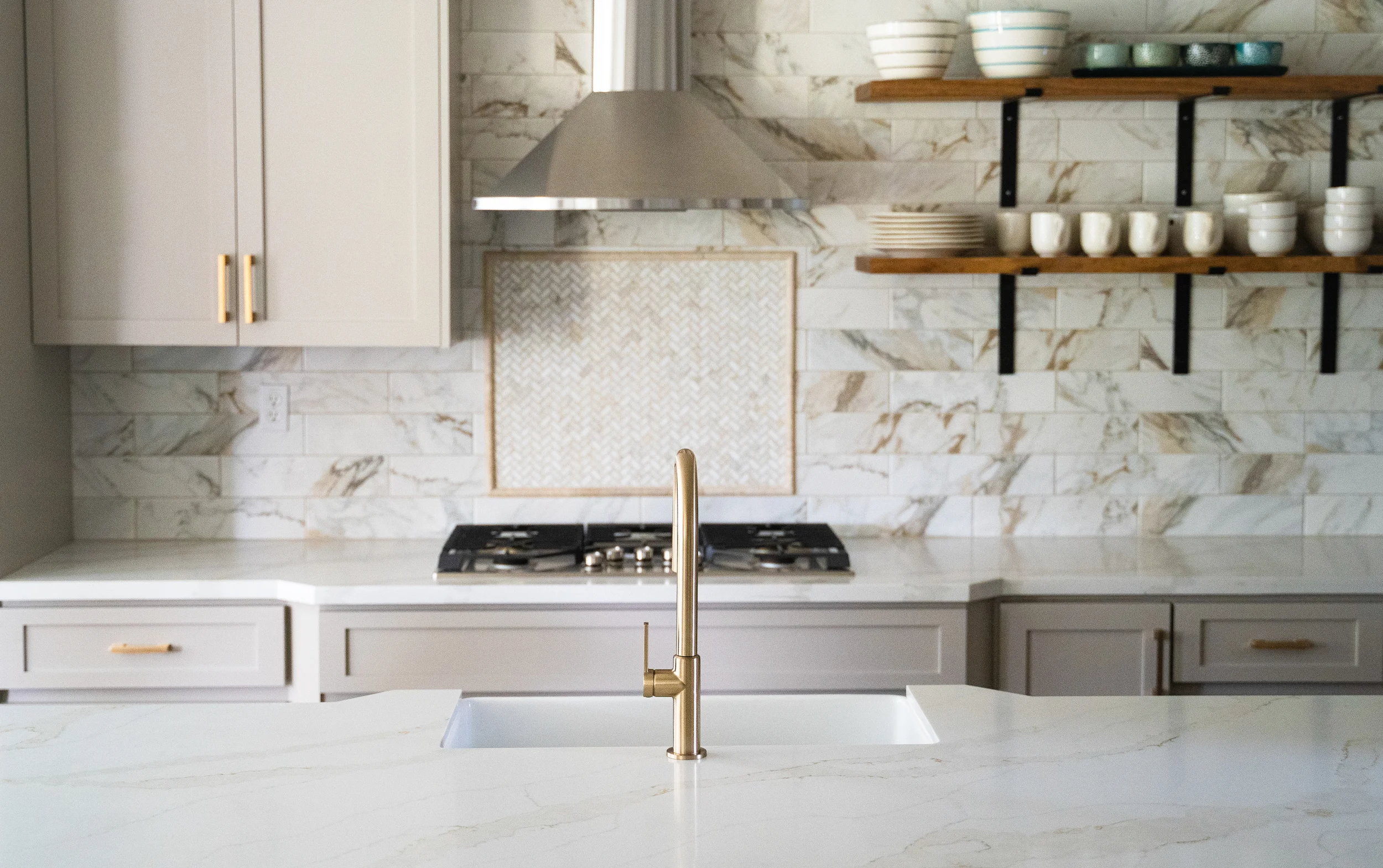
When discussing materials for this application, natural marble remains the undisputed classic choice. Premium stones like Calacatta Gold, Statuario, or heavily veined Arabescato offer dramatic, flowing geological patterns that turn a simple wall into a masterpiece. Designers often utilize a technique called book matching for large walls. This involves taking two sequential slabs from the same block of stone and polishing opposite faces. When placed side by side on the wall, the veining mirrors itself perfectly, creating a massive, symmetrical butterfly pattern.
However, natural marble is highly porous and chemically sensitive. It requires diligent, ongoing maintenance and frequent sealing to prevent permanent staining from common kitchen elements like hot cooking oils, red wine, and highly acidic tomato sauces or citrus juices. For homeowners heavily prioritizing extreme durability alongside high end luxury, engineered quartz and advanced Gauged Porcelain Tile Panels (GPTP) are phenomenal, cutting edge alternatives.
Modern digital printing and manufacturing techniques allow these non porous, engineered materials to flawlessly replicate the exact look and textural feel of premium natural marble or exotic quartzite. Importantly, they offer completely unmatched, bulletproof resistance to heat, aggressive stains, and deep scratches. GPTP slabs can be manufactured in massive dimensions, sometimes reaching five by ten feet, yet they remain incredibly thin and relatively lightweight compared to solid stone blocks.
It is absolutely crucial for any homeowner to fully understand that handling, fabricating, and installing full stone or large format porcelain slabs is never a standard DIY project. These massive materials are incredibly heavy, surprisingly fragile until they are properly adhered to a perfectly flat wall, and require extreme precision cutting. Modifying these slabs on site to perfectly accommodate electrical outlets, plumbing fixtures, and heavy range hoods requires specialized diamond tooling and immense experience. When investing in a premium slab feature, partnering with an elite tile contractor Chicago based or local to your area is non negotiable. Only a dedicated specialist will possess the massive A frame transport racks, vacuum suction handling equipment, and specialized structural adhesives required to ensure the structural integrity and flawless aesthetic finish of a heavy stone wall assembly.
3. Subway Tile Reimagined: Bold Fresh Takes on a Historical Classic
The standard subway tile will never truly go out of style. First introduced in the early 1900s for the subterranean transit stations of New York City, its clean geometric lines and historical charm make it an incredibly safe, enduring, and universally appealing choice. However, the most innovative interior designers are constantly finding brilliant new ways to update this century old classic. The goal is to ensure it feels remarkably fresh, custom, and highly contemporary rather than tired or predictable.
One of the easiest ways to modernize the look is by aggressively playing with proportions. The traditional subway tile is a standard three by six inch rectangle. To instantly update this aesthetic, homeowners are increasingly opting for elongated, linear formats. Sizes such as two by eight inches or even three by twelve inches are incredibly popular right now. These longer, leaner dimensions strategically draw the human eye horizontally across the room, essentially tricking the brain into perceiving the kitchen space as significantly wider and more expansive than it actually is. Conversely, oversized, chunky subway tiles measuring four by twelve inches are being utilized to create a highly substantial, minimalist, and modern look that intentionally features far fewer grout lines.
Beyond simple dimensional changes, texture and finish variations are revolutionizing this classic shape. We are seeing a massive shift away from the standard flat, highly glossy white glaze. Beveled edges have become a staple, adding a sophisticated three dimensional architectural quality to the wall. The angled edges beautifully catch ambient light and under cabinet lighting to create subtle, shifting geometric shadows throughout the day.
Matte finishes are also gaining massive traction in the luxury market. A matte or honed subway tile physically absorbs light rather than aggressively reflecting it. This creates a much softer, more muted, and highly sophisticated atmospheric backdrop. Matte finishes pair exceptionally well with deeply saturated, bold cabinet colors or highly dramatic, heavily patterned natural stone countertops. Furthermore, crackle glazes are returning to prominence. These tiles feature intentional, delicate hairline fractures beneath the clear top glaze, mimicking the look of aged, antique ceramics. It is important to note that crackle glazed tiles require specialized penetrating sealers prior to grouting to prevent the colored grout pigment from permanently staining the delicate fissures.
Perhaps the single most impactful way the subway tile is being completely reimagined today is through innovative layout strategies. For several decades, the absolute standard application was the horizontal offset pattern, commonly known as a running bond or brick pattern. Today, the vertical stack is incredibly dominant. By perfectly aligning rectangular tiles vertically side by side in a straight grid, you create incredibly clean, modern, unbroken lines that forcefully draw the eye upward. This specific visual trick gives the powerful illusion of much higher ceilings. This particular layout feels highly tailored, strictly architectural, and distinctly modern, completely transforming a basic, inexpensive tile into a custom design statement.
4. Embracing Bold Color, Earthy Tones, and Textural Depth
The long reigning era of the stark, clinical, all white kitchen is definitively coming to an end. We are witnessing a massive industry pivot toward spaces heavily infused with deep personality, inviting warmth, and saturated color. The backsplash provides the absolute perfect architectural canvas to introduce these dynamic elements without completely overwhelming the entire room or making the space feel visually heavy.
Stark, brilliant whites and cool, icy, sterile grays are rapidly being replaced by a much warmer, more welcoming palette of neutrals. Creamy ivory, warm earthy taupe, soft sand, and complex mushroom tones are currently highly sought after by top tier designers. These specific colors create a highly calming, deeply inviting atmosphere. They pair exceptionally well with the current trend of natural, unstained wood cabinetry and living finishes like unlacquered brass or raw copper hardware, which naturally patina and change color over time. Terracotta tiles are also experiencing a massive, unexpected renaissance. They bring a rich, baked earth warmth and a rustic, European farmhouse sensibility that instantly grounds the entire kitchen design.
For those homeowners strongly desiring more vibrant color, nature inspired, biophilic hues are completely dominating the luxury market. Soft sage green, deep olive, and moody forest tones bring an organic, grounding, and highly calming energy directly into the home. These specific green shades act almost perfectly as neutral colors, playing exceptionally well with both light oak and dark walnut cabinetry. Deep, highly saturated moody blues like navy, indigo, and even rich plum are also fantastic popular choices for creating a highly dramatic, contrasting focal point, particularly when installed directly behind a massive professional cooking range or a large farmhouse sink.
When deliberately opting for a bold, dark color, selecting a tile with a highly glossy finish can be a very strategic move. The high gloss surface naturally reflects massive amounts of ambient and task light, which actively helps keep the dark tones from making the culinary space feel visually heavy, small, or overly enclosed.
We must also discuss the intense rise of three dimensional textures. Fluted, ribbed, and heavily fluted tiles are becoming massive statement pieces. These tiles feature deep, continuous vertical or horizontal grooves. When illuminated by specialized directional under cabinet lighting, fluted tiles create a dramatic, high contrast interplay of deep shadows and bright highlights, turning a flat wall into a highly tactile architectural feature.
5. Navigating Complex Patterns, Mosaics, and Custom Layouts
If you heavily prefer neutral, understated colors but still desperately want a highly dynamic, visually interesting backsplash, playing with intricate geometric patterns is the absolute perfect solution. A highly creative, complex layout instantly turns simple, often affordable tiles into a deeply custom, high end design feature.
The timeless herringbone pattern remains a spectacular choice. In this layout, rectangular tiles are carefully laid at a precise forty five degree angle to create a continuous V shaped zigzag pattern. This specific orientation brings incredible visual movement, dynamic energy, and classic elegance to any kitchen. While a true herringbone layout requires significantly more raw material due to waste and demands vastly more complex wet saw cutting than a standard horizontal layout, the resulting bespoke, highly tailored appearance is always well worth the extra effort and investment. It works beautifully with classic white marble pieces, glossy ceramic subway tiles, or even heavily textured wood look porcelain planks.
Moving beyond rectangles, complex geometric shapes like small hexagons, elongated octagons, and intricate Moroccan arabesques offer a refreshing visual break from standard right angles and straight lines. Precision waterjet technology has revolutionized the mosaic industry. Manufacturers can now use highly pressurized streams of water mixed with abrasive garnet to cut incredibly intricate, curving floral or geometric patterns out of solid marble. These advanced waterjet mosaics often stunningly blend multiple materials together, such as embedding thin strips of polished brass or brushed stainless steel directly into a background of honed white marble. This creates a literal jewelry box effect on your kitchen walls.
Because these highly intricate patterns naturally draw a massive amount of visual attention, they are often used very strategically by designers. A highly common and deeply effective design choice is to use a simple, quiet field tile for the vast majority of the kitchen walls, but create a heavily framed, highly complex mosaic feature directly behind the primary cooking stove. This framed inset serves as a stunning, intentional focal point that visually anchors the entire room, much like a beautiful piece of framed art.
6. Technical Mastery and the Critical Importance of Professional Execution
Selecting the absolutely perfect tile material, color, and pattern is merely the first preliminary step in your remodeling journey. The true, lasting success of your entire kitchen upgrade relies almost entirely on the hidden technical execution of the project. A breathtakingly beautiful, highly expensive tile installed poorly using incorrect methods will very quickly become both a structural liability and an aesthetic nightmare.
A flawless, mirror flat backsplash fundamentally requires a perfectly plumb and flat wall substrate. In older architectural structures, particularly when undertaking projects related to remodeling Chicago area properties which have experienced decades of natural structural settling and foundation shifting, the existing drywall or historical plaster is almost never perfectly flat or plumb. Attempting to install large format tiles, long linear subway tiles, or rigid stone mosaics over a wavy, bowed wall will absolutely result in a condition called lippage. This occurs when the edges of the installed tiles do not sit perfectly flush with one another, creating harsh shadows and uneven surfaces. Elite professional installers will aggressively address this by meticulously floating the wall with specialized rapid setting cementitious compounds, or by completely tearing out the drywall and installing perfectly shimmed, rigid cement backer boards to create a mathematically flat canvas before a single piece of tile is ever set.
Furthermore, the choice of adhesive is incredibly critical. Many amateur installers heavily rely on organic mastic, a premixed adhesive sold in buckets at hardware stores. While highly convenient, mastic is fundamentally water soluble and absolutely cannot withstand high heat. Using mastic behind a high output professional gas range is a guaranteed recipe for catastrophic failure, as the intense heat will eventually re emulsify the adhesive, causing the tiles to literally detach and fall off the wall. True professionals strictly utilize high quality, polymer modified powdered thinset mortars. These complex chemical mixtures require specific ratios of water and precise mixing speeds, but they cure into a rock hard, heat resistant, and highly waterproof cementitious bond.
We must also deeply analyze the role of grout. Grout is far from being just a functional filler. Aesthetically, utilizing a highly contrasting grout color will aggressively highlight the geometric pattern of the layout, while utilizing a perfectly color matched grout will seamlessly blend the tiles together to create a subtle, monolithic texture. Practically speaking, the chemical composition of the grout you choose matters immensely in a harsh culinary environment. Traditional Portland cement based grout is inherently highly porous. Even when sealed, it will eventually absorb and permanently stain from hot tomato sauce, splattered coffee, or aerosolized cooking oils.
Upgrading your installation to a high performance, two part chemical epoxy grout or an advanced single component urethane grout is highly recommended by all industry experts. These advanced, modern formulas are completely non porous by nature. They are incredibly, fiercely resistant to all household chemicals, absolutely immune to organic stains, and they never, ever require topical sealing. While epoxy grout is notoriously difficult and highly time sensitive to install properly, making daily maintenance completely effortless for the next twenty years makes it an incredible investment.
Given the intensely precise wet saw cutting required around complex electrical outlets, the highly specialized diamond tooling required for drilling through dense porcelain, and the strict mathematical layout planning required to absolutely avoid leaving tiny, awkward slivers of tile at the visible edges of your cabinetry, this is undeniably a trade best left to true masters. When you find yourself searching for a deeply reliable backsplash installation near me, you must actively look for dedicated masonry or specialized tile artisans rather than generalized handymen.
